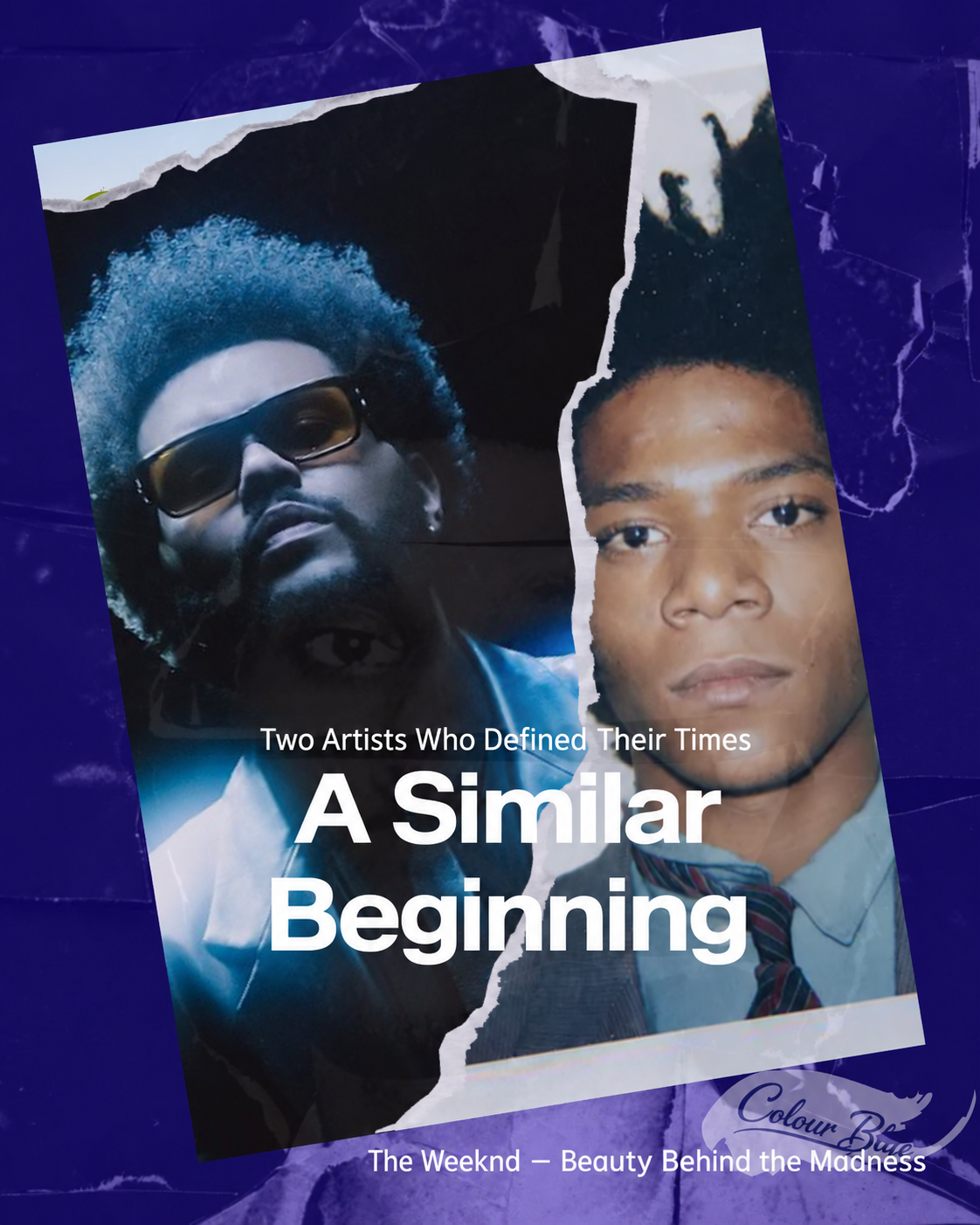

The Weeknd · Beauty Behind the Madness · Album
Place The Weeknd’s Beauty Behind the Madness beside the imagery of Jean-Michel Basquiat, and a related tension appears across different forms of art. This review focuses on how unease and disorder remain visible on the surface of the work, rather than treating the two artists’ lives as the same story.
A Similar Beginning for Two Artists
The starting point for placing these two influential artists alongside each other is a visual impression. An apparently unpolished silhouette and a raw expression create a different tension from the image of the perfectly finished star. Something within the beauty refuses to resolve neatly.
The title Beauty Behind the Madness touches that same tension: the sense that an attractive surface cannot be separated from the turmoil behind it. The comparison with Basquiat lets us read that relationship again through images beyond the music.

The Unease Created by Hair and Image
Seeing an echo of Basquiat in The Weeknd’s hairstyle from this period can extend beyond a comparison of appearances. Its irregular form suggests untamed energy, adding a visual texture to the album’s narratives of unease and self-destruction.
Appearance alone cannot establish someone’s actual state of mind or the nature of their life. What matters here is the impression an image creates. Uneven lines and rough contours feel like the surface of emotions that resist being made smooth. It is at that point that these artists’ images overlap.

The Madness Behind Beauty
The album places narratives of emptiness, addiction and collapse inside a beautiful voice and a seductive surface. A dark feeling remains even during its most pleasurable moments, making light and shadow difficult to separate. Another emotion keeps following the image of success.
Seen alongside Basquiat’s imagery, that coexistence opens another reading: the way immediate visual force and an unsettling trace can occupy the same frame. Sound and image do not explain each other so much as bring the cracks within beauty into sharper view.

Expression That Does Not Hide Pain
At the center of this comparison is an attitude that does not push pain outside the work. Unease and disorder can be read as materials that move expression, rather than stains to erase. Because those traces remain, the art never becomes entirely smooth.
The figures within The Weeknd’s songs likewise make emptiness and self-loathing part of their stories. Hearing them as characters and emotions created by music, rather than automatically equating them with the artist’s life, makes the work’s contradictions clearer. Attraction and discomfort remain in the same scene.

When Different Forms of Art Seem to Overlap
Basquiat and The Weeknd belong to different media and different times. Within this comparison, however, they meet through an expression that leaves unease and disorder visible. The resemblance is in how the work reveals emotion, not in a claim that their lives are identical.
Beauty Behind the Madness remains one moment through which that texture becomes legible: an album where rough emotions survive inside polished pop. Seen beside Basquiat’s imagery, the trembling line at the edge of that beauty becomes a little clearer.
